
“Bitch Planet” and Activist Paratexts

American comic book fan communities are stereotypically male. “Stereotypically” because girls & women have always loved comics but are less represented, both culturally & in terms of marketing. “Bitch Planet” addresses this neglect, cultivating a woman-led, explicitly feminist fan community. 1/13
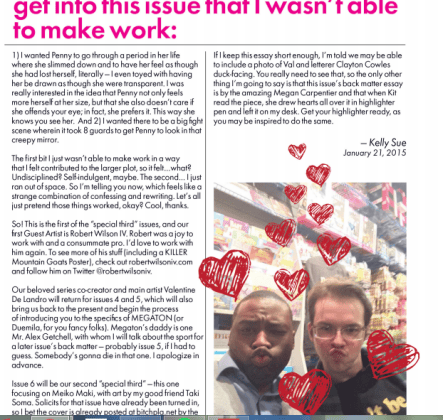
The individual issues of Bitch Planet include a variety of interactive features, including a letter from writer Kelly Sue DeConnick discussing the creative process and an essay segment called “Bitches Be Like,” featuring guest authors writing about political undercurrents of that month’s story. 2/13

In addition, tweets from fans were included in a section called “Itty Bitty Bitchy” and fan art & photos–such photos of fans with “non-compliant” tattoos–were included in a section called “Bitch Face.” Each issue also includes fake advertisements incorporating feminist critique & humor. 3/13

Historically, many comic book letter pages, modelled after pulp sci-fi magazines, became a valuable virtual meeting place for fans eager to discuss their interests and connect with other fans. Letter pages printed names and addresses so fans could write to one another. 4/13

The presence & popularity of letter pages has waxed and waned but whenever they are present, this element of community building becomes available. The preeminent model of modern comic book fan communities is the one Stan Lee cultivated at Marvel in the 1960s. 5/13

Lee made himself available to fans in monthly “Bullpen Bulletins” where he addressed & flattered Marvel readers as a distinct group. He also oversaw the implementation of interactive features such as the “Marvel No-Prize,” encouraging fans to solve continuity problems. 6/13

Fan entitlement can have some less-than-positive effects. But helping fans feel like they have a voice in the creative process is a powerful tool for building community and creating fan loyalty. The Bitch Planet letter columns and backmatter take these lessons to heart–with a feminist twist. 7/13

The dialogs Bitch Planet created between creators, fans, critics, and academics wasn’t just about creating loyalty to a storyverse or brand. Instead, it was an invitation to critical awareness in and through comics and through multi-voiced discussion of themes and political dynamics. 8/13

Sadly, most of the Bitch Planet backmatter isn’t available in collected editions or accessible online. Which is good and bad; the exclusivity of the content within monthly issues encouraged regular, active engagement but is less effective at sustaining community after the fact. 9/13

But the collected editions do include the parodic ad pages, originally headlined “Hey Kids, Patriarchy!” This is a play on the “Hey Kids, Comics!” signs that used to adorn spinner racks while the pages themselves are inspired by comic book ad pages from the Golden & Silver Ages. 10/13

Interpreting this onslaught of information is very engaging and the content of the jokes is self-consciously political, in conversation with the story. As Nicole Pizarro observes, the ads are parodically “invested in women losing weight & ensuring that their (male) partners are satisfied.” 11/13

Per Pizarro, these pages also “rhetorically trace the narrative… As the story progresses, the messages found in the ads become less about compliance and more about revolt.” Case in point, in Bitch Planet #5, the ads are replaced with a bulletin board defaced by rebellious graffiti. 12/13

The vibrancy of the Bitch Planet letter columns and backmatter, which undoubtedly contributed to the commercial and critical success of the comic, proves that if you build it, they will come–the “it” being feminist spaces to talk comics, the “they” being feminists who love comics. 13/13