
An Introduction to “Green Lantern/Green Arrow”

“Green Lantern/Green Arrow” by Dennis O’Neil with pencils by Neal Adams, comprises 14 issues of the regular “Green Lantern” series. Published from 1970-72, this storyline is highly ambitious, deeply flawed, and endlessly interesting, both on its own merits and as a piece of comics history. 1/10

Subsequently collected as “Green Lantern/Green Arrow: Hard-Travelling Heroes,” this storyline showcases a commitment to social relevance instigated by Green Arrow (Oliver Queen) compelling Green Lantern (Hal Jordan) to question his blind commitment to law & order. 2/10

O’Neil, who graduated college with a literature degree followed by a stint in the Navy and jobs in journalism before becoming a comics writer, described the storyline as an attempt to consider, “What would happen if we put a super-hero in a real-life setting dealing with a real-life problem?” 3/10

This premise is epitomized by several subsequently iconic stories in the series, including Green Lantern #85, in which Green Arrow’s ward Speedy is revealed to be a heroin addict. Other issues address other hot button topics of the day, including racism, feminism, and environmentalism. 4/10

In some cases, the series is highly effective in illustrating the historical shortcomings of superhero comics, including their tendency to tell stories about good and evil that ignore contemporary social issues or offload political messages into sometimes-obtuse fantastic metaphors. 5/10

In other cases, the series can be hamfisted, telling readers the moral rather than developing nuance. And its handling of racism & feminism can be dated & appropriative, as in a story where Green Arrow disguises himself as a Native American hero to inspire a tribe to challenge a land claim. 6/10

Yet the series’ determination to challenge prevailing assumptions about the types of stories superheroes can star in was deeply influential, inspiring other creators and participating in discourse around comics censorship; the Speedy addiction story was enabled by a revision of the Comics Code. 7/10
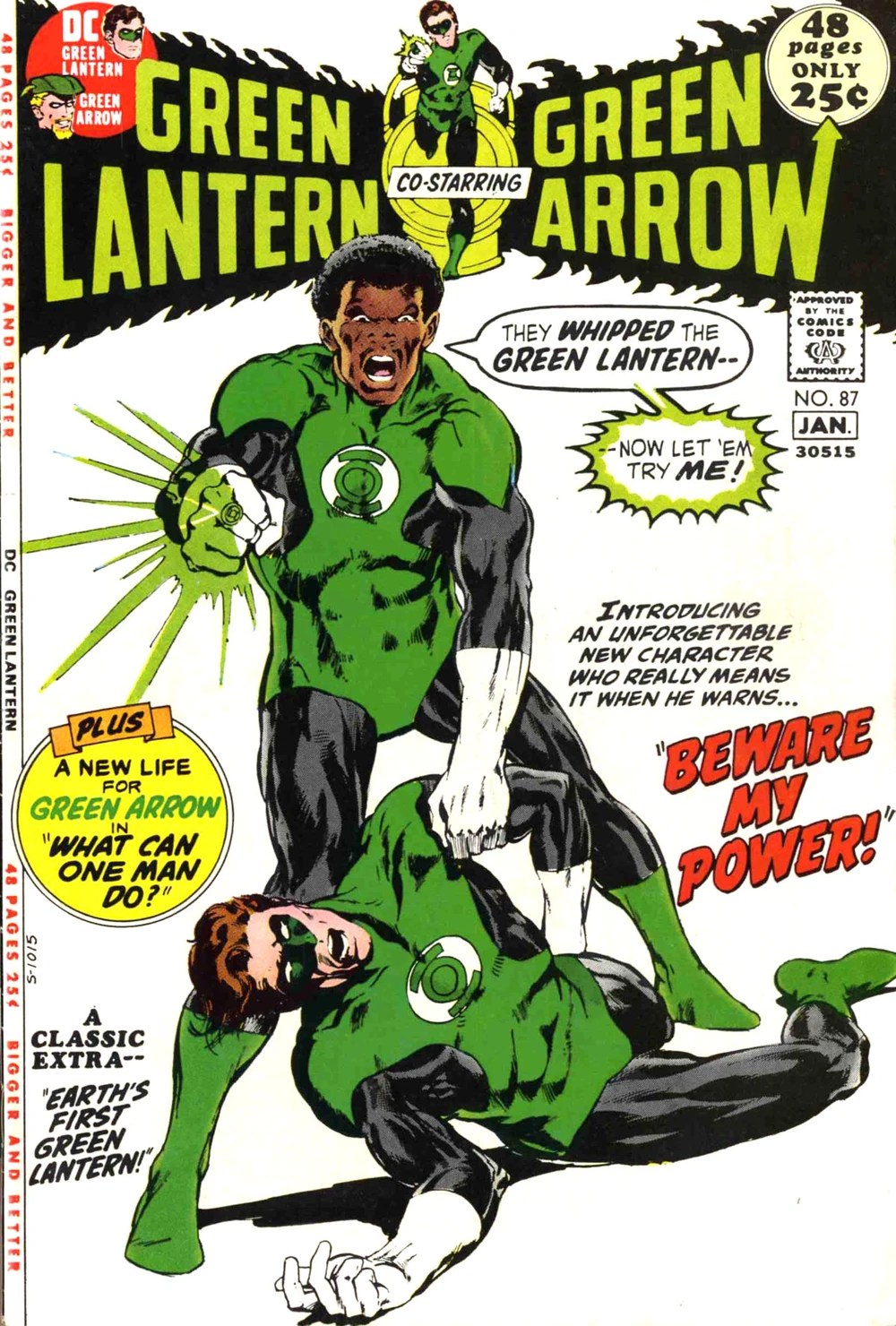
In addition, the series introduces John Stewart, who would go on to become one of DC Comics’ most prominent Black superheroes, as most recently showcased in HBO’s popular streaming series “Lanterns,” with a storyline that overtly references Stewart’s comic book debut. 8/10

The series is also influential as a showcase for the art of Neal Adams, whose expressionistic realism & experimental layouts similarly epitomized an era where superhero comics agitated to expand beyond their reputation as simplistic fantasy stories for children and become seen as serious art. 9/10

Our forthcoming series of threads & videos on “Green Lantern/Green Arrow” will explore the highs & lows of this profound & problematic but definitely groundbreaking series, through close reading of individual issues & consideration of the series within various historical contexts. Stay tuned! 10/10