
Johan as Shadow Self in “Monster”

One way to read the Tenma/Johan relationship is through Carl Jung’s concept of the “shadow self,” the aspects of the self that are most distant from the person that an individual wants to be. In literary theory, the shadow self represents a villain who is a dark mirror of the hero. #monster 1/11
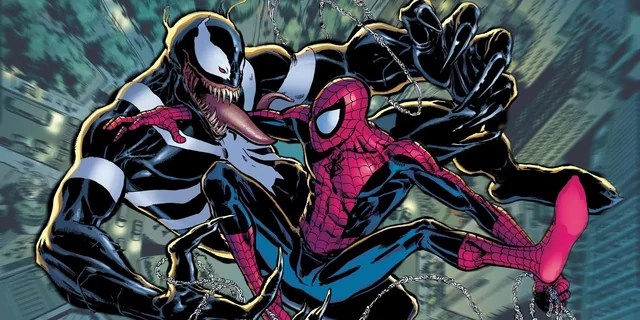


Thus, Tenma and Johan’s conflict can be read as that of an ideal ego vs a shadow self. In such an approach, the story itself becomes a psychodrama in which these two aspects of one person seek to resolve their disconnect in a manner that is consistent with Jung’s vision: 5/11

First one has to accept and take seriously the existence of the shadow. Second, one has to become aware of its qualities and intentions. This happens through conscientious attention to moods, fantasies and impulses. Third, a long process of negotiation is unavoidable. 6/11

Tenma does not simply confront and destroy Johan; he indeed has to take him seriously (when nobody thinks he exists), become aware of his qualities and intentions, and become attentive to his inner thoughts and processes. And with 18 volumes of manga, the negotiation is indeed long. 7/11

Tenma doesn’t destroy Johan. Nor does Johan destroy Tenma. They study each other and learn from each other, becoming, arguably, more nuanced and whole versions of themselves, exactly what Jung envisions as the goal of embracing the shadow self in psychoanalytic practice. 8/11

Now, if you’re not sold at all here (and I’m not sure I am either), please note that the application of this and other psychoanalytics theories to literature suggest that writing is a manifestation of the subconscious (like dreams) and therefore entirely within the realm of psychoanalysis. 9/11

Simply put, Urasawa need not have intended this at all, but as a person with a psyche, the ways in which his characters manifest on the page are quite capable of reflecting subconscious processes such as the one’s Jung seeks to identify in his concept of archetypes. So, maybe? 10/11

If nothing else, the shadow self offers a fun way to read “Monster” not as a story of two individuals at odds, but as one individual at odds with two different aspects of himself. This might not work for all readers, but it does potentially reflect the nuance and complexity of Urasawa’s iconic characters. 11/11