
Objects of Objectification in “Bitch Planet”

Kelly Sue DeConnick & Valentine de Landro’s “Bitch Planet” features considerable nudity (which we will have to censor here). It’s also indebted to exploitation aesthetics. Yet it consistently–and intersectionally–engages & challenges the politics of objectification. 1/15

Discourse in and around the meaning and effects of objectification is complex and ever-evolving. But in general, objectification is the act of curtailing the agency of another human being, reducing them, either socially or visually, to a state resembling that of an object. 2/15

Historically, women have been objectified through exaggerated aesthetics & feminine/sexual features. In Laura Mulvey’s classic formulation, objectified women connote “to-be-looked-at-ed-ness,” symbolizing erotic objects you’re meant to possess rather than ego ideals you’re meant to want to be. 3/15

Objectification intersects with race & disability in complex ways. Sometimes, Black & disabled bodies are objectified but desexualized, reduced to objects of fear/hatred. Other times, Black bodies are objectified by being hypersexualized. Either way, the consequences are especially intense. 4/15
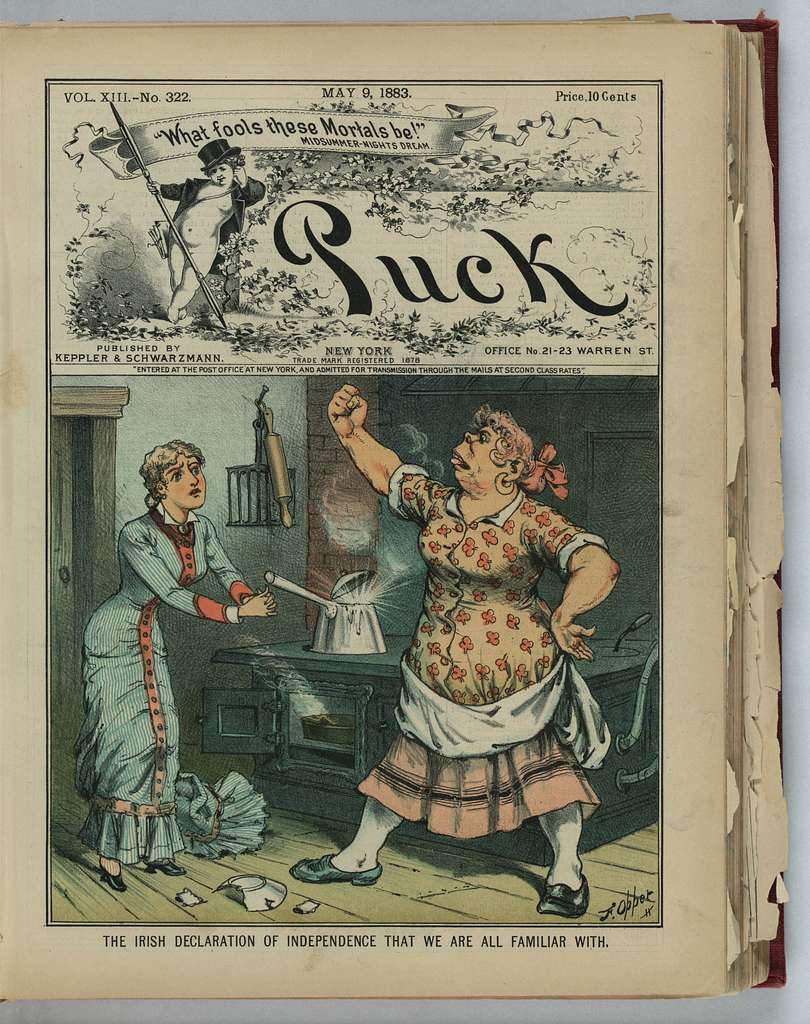
Comics’ historical reliance on simplification and caricature deeply imbricates them in visual tropes of objectification. Bitch Planet is clearly very aware of this history, as evidenced by its engagement with exploitation aesthetics & by its opening scenes, which include substantial nudity. 5/15

In these opening scenes, all the women who will become the series’ main characters are introduced naked and in states of helpless vulnerability, wherein they’re inspected & brutalized by their captors. Initially, we seem to share the perspectives of these captors & their objectifying gazes. 6/15

But even here, where the imprisoned women are naked & voiceless, displayed for visual inspection & labelled with their supposed sins, the art conveys disruptive ambiguity. The women spatially dominate their captors and their individuality endures, as De Landro draws six distinct bodies. 7/15

Here and throughout his work on Bitch Planet, De Landro’s depiction of distinct, diverse body types that thoughtfully express the histories and characters of the imprisoned women defies conventions of objectification that dehumanize female bodies through generic sameness. 8/15

In other words: Even when they’re naked & vulnerable, because they’re individualized and often defy heteronormative beauty standards, the women of Bitch Planet are seldom easily objectified. Their nakedness doesn’t flatter an implied male gaze but rather challenges its superiority. 9/15

Scholar Rebecca Wanzo underscores this commitment to challenging objectification and its intersectional implications by analyzing a scene wherein Kamu Kogo–whom Wanzo observes is partly inspired by Pam Grier–is subjected to a classic women-in-prison trope: the scopophilic shower scene. 10/15

Per Wanzo: “Kogo appears to be masturbating, and the comic’s fragmentation of her body is evocative not only of porn’s objectification of women into parts but the idea of porn objectifying women into parts.” IOW: this scene distills the social & visual politics of objectification. 11/15
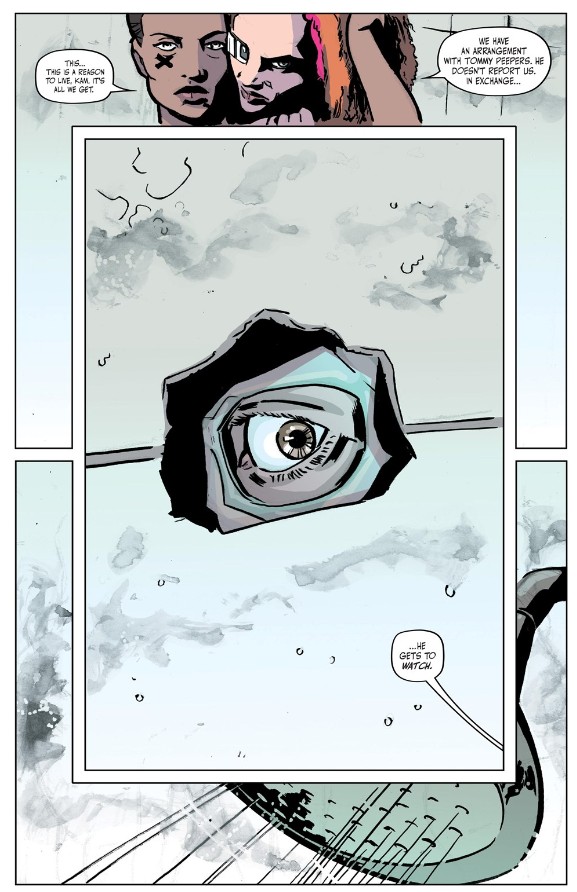
Wanzo continues: “The image is erotic and readers may take pleasure in the representation of this powerful black woman pleasuring herself as a pro-sex representation of black women’s sexuality. At the same time, the reader’s gaze may uncomfortably map onto the peeping Tom’s gaze.” 12/15
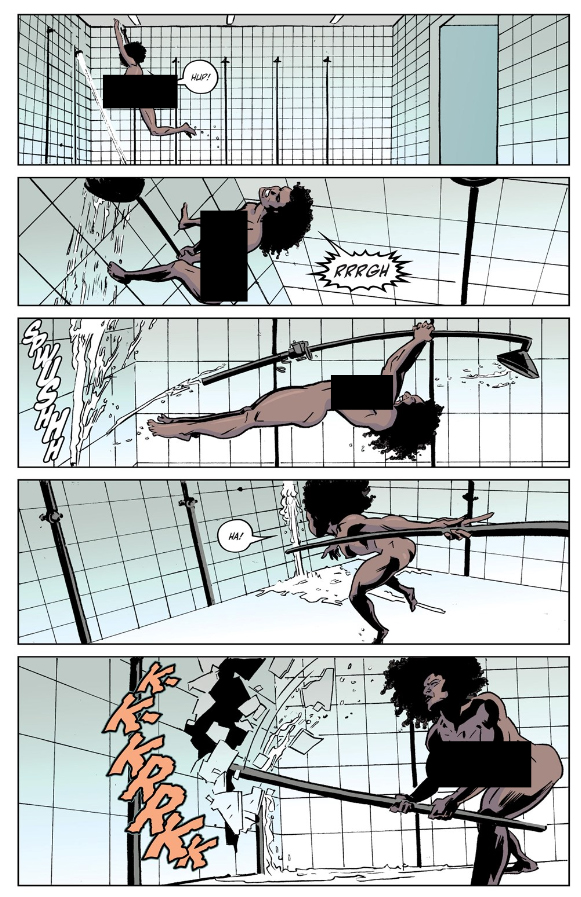
“His eye splits the lower half of the page and the last frame of the page is Kogo’s atomized mouth stating ‘Gotcha,’ disrupting his pleasure & what we think we’ve seen. She goes on to break the wall & wrestle the masturbating guard to the ground,” gaining leverage she uses to help other women. 13/15

Wanzo concludes: “De Landro’s artwork… resists the idea that the white & male gaze overdetermines possibilities for black women… We often condemn representations that utilize sensational & exploitation aesthetic, but we can read the entire comic as flipping the script of normativity.” 14/15

Ultimately, in its consistent, thoughtful interweaving of pleasure and pain, vulnerability and agency, Bitch Planet exploits bodies as extraordinary discursive machines, staging objectifying tropes to stage disruptions of those tropes and dialog about their enduring yet fragile power. 15/15